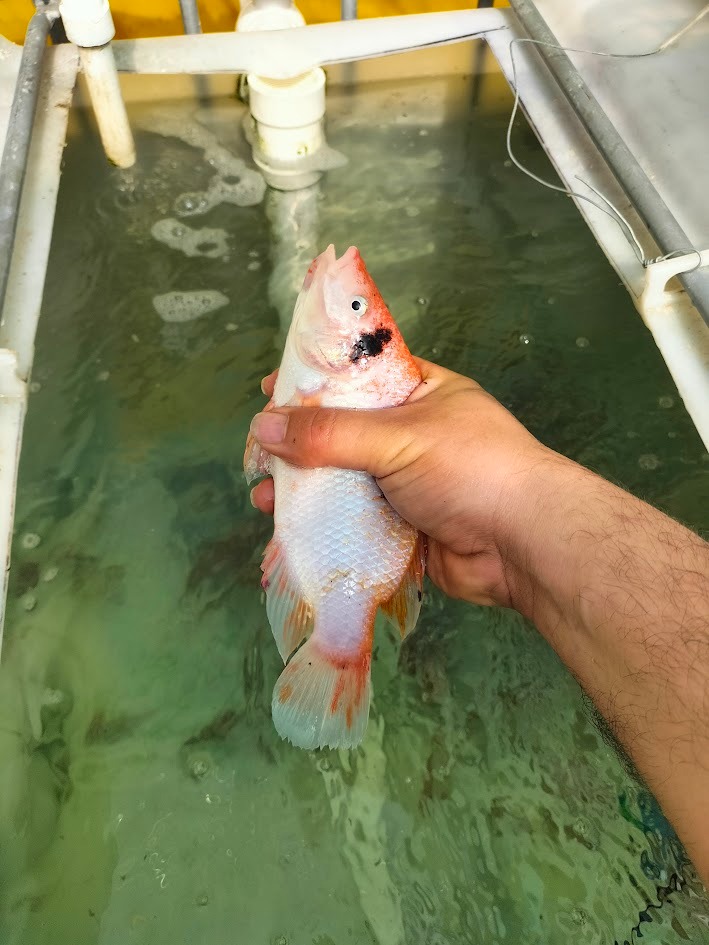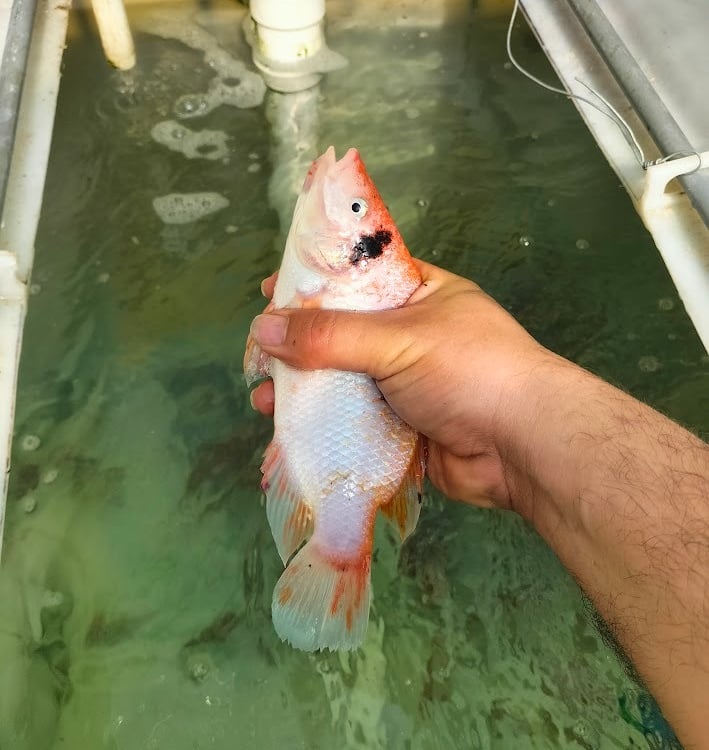
Long perceived as a curiosity limited to Sahara oases, tilapia farming integrated with agriculture has emerged as a national revolution. From the Mitidja plains to the orchards of Mascara, this "double-harvest farm" model is transforming agricultural holdings into highly profitable production units.
1. A Fertile Symbiosis: "Boosted" Water
The major interest for farmers lies in using the fishpond water for irrigation:
Natural Fertilizer: Water enriched with fish waste acts as a liquid organic fertilizer. According to the Directorate of Fisheries and Halieutic Resources (DPRH), this method reduces the use of chemical fertilizers by nearly 30%.
Agricultural Performance: Trials in Mascara showed that orange orchards irrigated with this water achieved average yields of 360 quintals per hectare, compared to 250 qxt/ha with traditional irrigation (Source: Ministry of Fisheries Technical Report).
2. National Expansion (North and Highlands)
The national program is no longer limited to the South. The state strategy aims to utilize the 100,000 irrigation basins identified in the North and the Highlands:
Highlands: Massive seeding operations have been carried out in Naâma and Sidi Bel Abbès to acclimate red tilapia (Source: Algeria Press Service - APS).
Coastal Areas: In Boumerdès and Chlef, local fisheries directorates are encouraging vegetable farmers to introduce tilapia to diversify their income (Source: National Chamber of Fisheries - CNPA).
3. Historic Financial Support
To ensure the success of this sector, the Algerian government has implemented unprecedented incentive measures in recent legislation:
Production Subsidy: The 2024 Finance Act introduced a subsidy of 50 DZD per kilogram of tilapia produced, paid directly to farmer-breeders.
Tax Relief: Inputs (feed and fingerlings) benefit from a reduced VAT rate and customs duty exemptions, in accordance with the 2025/2026 Finance Acts.
Market Price: The goal is to maintain tilapia prices between 600 and 700 DZD/kg, making it highly competitive against red meat and sea fish.
4. How to Get Started?
The entry barrier is very low if you already have irrigation infrastructure:
Seeding: The National Chamber of Fisheries and Aquaculture (CNPA) coordinates the supply of fingerlings via pilot hatcheries like Besbès or Ourhéla.
Training: Short-term training cycles are offered by fishery stations to master feeding techniques and water quality management.
Conclusion: Food Sovereignty in the Net
Integrating aquaculture with agriculture is the concrete response to Algeria's challenges: water conservation, clean production, and food security. This model is supported by international institutions like the FAO, which cites Algeria as a success story in the region.
Principales Sources citées :
Lois de Finances (2024, 2025, 2026) - Journal Officiel de la République Algérienne.
Rapports techniques du Ministère de la Pêche et des Productions Halieutiques.
Données de la Chambre Nationale de la Pêche et de l’Aquaculture (CNPA).
Études de rendement de la Direction de la Pêche de la Wilaya de Mascara.